Your Social Graph Doesn't Belong To You
Why creators are renting their audience instead of owning it — and what that actually costs.
The first time it happens, you feel silly being surprised.
You had 400,000 followers on Vine. Six-second videos. Millions of loops. You'd watched people turn those loops into development deals, brand sponsorships, agent representation. Vine wasn't just a platform — it was where your comedy lived. It was your portfolio, your proof of concept, your liftoff pad.
Then in 2017, Twitter shut it down.
Not because you broke a rule. Not because you violated some term of service. Not because your content went out of fashion. Twitter shut down Vine because the math on the business model didn't work, and when that happens, everyone with an audience there learns the same lesson: you didn't own any of it.
The videos you made were yours. The jokes, the creativity, the hours — that was yours. But the 400,000 people watching? The relationship you built with them? The megaphone you'd constructed? That belonged to Twitter. You were renting shelf space in their store, and they got to decide when the lease ended.
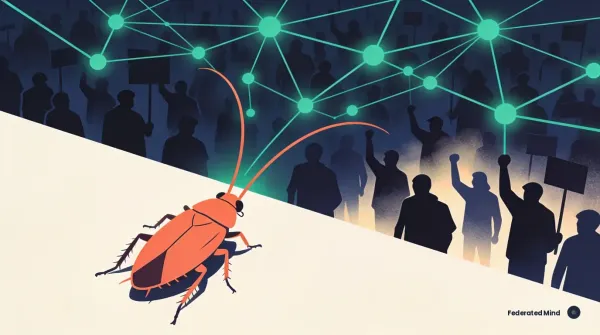
Vine creators scrambled to TikTok, YouTube, Instagram Reels — rebuilding from scratch in different houses. Some made it across. Some lost 90% of their audience in the transition because TikTok's algorithm doesn't care what you were on Vine. The followers weren't really yours. They were just people who happened to follow an account that lived on Vine's infrastructure.
This is the core betrayal of social platforms, and we've stopped noticing it because we grew up in it.
What We Actually Mean by Social Graph
When people talk about "growing your audience," they're usually thinking about followers — a number. Ten thousand. A hundred thousand. A million. It's a scoreboard metric, and we treat it like it matters.
It does matter, but not the way most creators think it does.
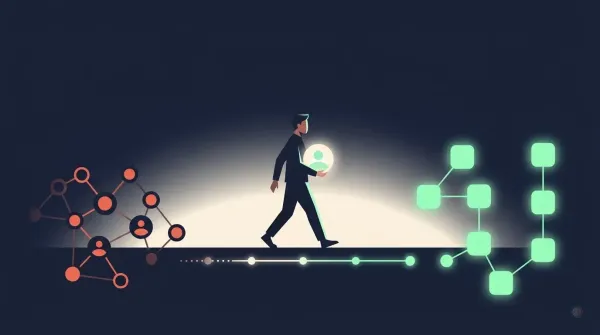
What actually matters is your social graph. That phrase gets thrown around like jargon, but it's simple: your social graph is the map of relationships you've built. It's not the count of followers. It's the actual people, where they are, how they can reach you, and how you can reach them. It's the thing that lets you send a message to the people who care about your work and know they'll see it.
When you post on Twitter, your graph lives in Twitter's database. When you post on Instagram, your graph lives in Instagram's database. When you post on Substack, your graph lives in Substack's server. You don't have a copy. You don't have a backup. You don't have ownership.
This seems fine until it isn't.
YouTube's algorithm changes overnight, and suddenly nobody sees your videos. You had 200,000 subscribers, but they might as well not exist if they can't see your work. You can't call them up and say "hey, I moved my content somewhere else — here's where to find me now." The platform controls whether they see your notification.
You post something on TikTok that a competitor or a bot farm reports, and your account is deleted. Five years of videos, one and a half million followers — gone. You can appeal, but there's nobody to appeal to. There's no customer service line. The social graph evaporates.
You build a podcast on a platform's distribution network. The platform pivots. It shuts down. It gets acquired and deprioritized. Your listeners have no way to follow you because they don't actually know how to reach you — they just know to check the app where you used to post.
The MySpace musicians learned this first. Then the Vine comedians. Then the Instagram photographers who woke up one day to find that the algorithm had decided to prioritize video. Then the Twitter personalities who watched Elon Musk transform the platform into something unrecognizable. Then the creators who were building on Meta's platforms and got absolutely flattened when Meta's AI monetization strategy didn't include them.
Every wave of this teaches the same lesson: your social graph is a loan. The platform can call it in whenever the business model shifts.
The Real Cost of Platform Dependency
We talk about platform collapses in marketing terms. Creators "lose followers." Audiences "migrate." It sounds like a logistical problem.
It's not. It's an existential one.
When your social graph disappears, you don't just lose a number. You lose your income. You lose your distribution. You lose the evidence that your work matters.
Consider the economics for a second. A mid-tier creator with 100,000 engaged followers on Instagram might be making $5,000 to $15,000 a month from sponsored content, brand deals, and platform revenue sharing. That's real money. That's a business. That's a reason not to take a $45,000-a-year job and give up your independence.
But that income exists only because those 100,000 people can see your posts. The algorithm has to put you in front of them. The platform has to not ban you. The platform has to not pivot away from your format. The platform has to not decide that creators like you aren't valuable to the business model anymore.
Every single month, that income is contingent on things you don't control. You don't own the relationship with your audience. You're dependent on a company that has no obligation to keep you fed.
This isn't hypothetical. The Mighty Networks creator who woke up to find her platform had lost 60% of active users. The Medium writer who watched their revenue per article crater when Medium changed its payment structure. The YouTube creator who spent two years building an audience, only to have YouTube's algorithm downrank their entire category. These aren't edge cases. They're the normal state of being a platform-dependent creator in 2026.
The cost isn't just financial, either. It's psychological. You're building a career on sand. You're making decisions — how much time to invest, whether to turn down other opportunities, how to position yourself — all based on the assumption that your platform will stay stable and valuable. But you have zero power to actually stabilize it. You're passengers in someone else's car.
Some creators have built moats against this. They've spent years developing email lists. They've moved their monetization to Patreon or Substack. They've diversified across platforms so that no single collapse can kill them. That works, but it's exhausting. You're essentially maintaining multiple separate audiences in multiple separate places, praying that you have enough presence on at least one platform to stay relevant.
And even if you do this perfectly, you're still not in control. An algorithm change on one platform can cascade across your entire network. Email providers can suddenly start filtering your newsletters into spam folders. Patreon can change its fee structure. Stripe can decide your content violates their terms.
The fundamental problem remains: you're renting.
We Accepted This Deal Without Reading the Contract
Here's what's weird about this situation: we got here by choice, kind of.
Platforms were genuinely useful when they arrived. MySpace gave musicians a space to post music that was better than personal websites. YouTube solved the distribution problem. Facebook made it easy to stay connected. Twitter made real-time conversation possible. These things were genuinely better than what existed before.
So we moved in. We built our houses on their land. We brought our audiences with us. And at some point, we stopped noticing that we were renting.
The platforms didn't hide this, exactly. It was always in the terms of service. The content was yours, but the platform and the network weren't. They could change the rules. They could delete accounts. They could modify the algorithm. They could pivot away from creators. It was all technically disclosed, in the same way that car insurance terms are technically disclosed — nobody reads it, but it's there.
What nobody made explicit was the cost. Nobody said: "You can build an audience here, but you should know that the platform can collapse, get acquired, change strategy, or decide you're not valuable anymore — and when that happens, you lose everything." That calculation wasn't presented as a choice. It was just the default.
So creators optimized for platforms. We made content suited to TikTok's algorithm. We posted at times when Twitter would be most active. We built our entire brand identity inside a platform's template. We treated the social graph like it was ours because we were generating the content, but we never really owned the path to our audience.
The platforms were fine with this. In fact, they preferred it. The more dependent creators were, the more content the platforms got, and the more users they retained. Creator dependency was a feature, not a bug.
It still is.
The Problem Isn't One Platform — It's the Model
What makes this tricky is that this isn't a story about one bad platform. It's not "Twitter got bad after Elon" or "Instagram prioritizes video now" or "YouTube's algorithm sucks." Those are symptoms, not the disease.
The disease is that we've normalized the idea that your audience should live on someone else's property, that your social graph should be controlled by a company that has no obligation to keep you in business.
Think about almost any other business. If you own a retail shop, you own the storefront. You own the customer list. If you own a newsletter, you own the email addresses. If you own a podcast, you own the distribution and the listener relationship. You're not dependent on a single company's goodwill.
But if you're a creator, your entire business model is built on dependency. You depend on the platform staying alive, staying relevant, staying profitable, and deciding that you're worth keeping. You depend on the algorithm not changing. You depend on the business model not pivoting. You depend on not getting banned, demonetized, or deprioritized. You depend on a lot of things you can't control.
And every platform will eventually violate at least one of these dependencies. Maybe not today. Maybe not this year. But eventually, something will change.
TikTok might get banned. Instagram might decide that creators aren't as important as the algorithm thinks. Discord might go public and start charging for features. Substack might pivot away from newsletters. The pattern is consistent: platforms are valuable right up until they're not, and when the shift comes, creators are the last to know.
The real issue is that the model itself is broken. The model that says "build your house on someone else's property and hope they don't raise the rent or sell the lot" is fundamentally insecure. It's not a business strategy. It's a gamble.
For years, creators made this gamble because they had no choice. Building your own infrastructure was expensive, technical, and ineffective. You couldn't build a social graph on your own servers — you needed a platform to reach people.
That's no longer true. Or at least, it doesn't have to be.
What Happens Next
We're at an inflection point. Creators are starting to ask: what if my social graph was actually portable? What if I could build an audience in one place and move it to another without losing anyone? What if I owned the relationship with my followers instead of renting access to them?
These aren't rhetorical questions anymore. The technology to enable this already exists. It's been built. It's live. It's being used by creators, journalists, and communities right now.
The catch is that most creators haven't heard about it yet, and the platforms that profit from your dependency have every incentive to keep it that way.
This is where this series is going. We're going to talk about what it looks like to own your social graph. We're going to walk through the tools, the platforms, and the protocols that make it possible. We're going to show you what creator-owned infrastructure looks like in practice — not as a theoretical future, but as a living, breathing thing that exists today.
It won't replace TikTok or Instagram. You'll probably keep using those platforms. But you won't be dependent on them. Your audience won't be locked in. Your income won't be contingent on an algorithm you don't control.
You'll own your social graph. Which means you'll own your business.
For now, the key insight is this: everything you've built on a platform is a lease, not a deed. The sooner you act like you're renting, the sooner you can start building something you actually own.
The next piece in this series digs into what that looks like in practice. If you want to read it, you might want to know when it drops.
The next piece drops soon. Don't miss it.
Subscribe to Federated Mind →