The Visual Fediverse: Where Photos and Videos Live Outside the Algorithm
Pixelfed, Loops, PeerTube, and a Flickr that never quite federated. The visual fediverse isn't one Instagram clone. It's an ecosystem where your photos and videos live on infrastructure you control, federate by default, and no algorithm decides who sees them.

Part 2 of The Fediverse Beyond Mastodon. This series is part of the Exploring the Fediverse umbrella. Part 1 covered the microblogging and multi-protocol platforms beyond Mastodon. This post maps the visual layer: where photos and video live on the fediverse.
Instagram, TikTok, and YouTube are the three defaults for publishing visual work online. Each has a federated counterpart, or several. But the fediverse visual story isn't a set of one-to-one clones. It's a structural shift: your photos and videos live on infrastructure you or your community control, they federate across the network by default, and no algorithm decides who sees them.
Where things stand
| Platform | FediDB (MAU) | FediIndex (active) | fediverse.observer (½-yr) |
|---|---|---|---|
| Pixelfed | 684 servers / ~107K | ~700 servers / ~100K | 753 servers / ~105K |
| PeerTube | 1,533 servers / ~47K | ~1,600 servers / ~44K | 2,001 servers / ~52K |
| Loops | 26 servers / ~4.1K | 26 servers / ~4.4K | 26 servers / ~4.6K |
These numbers come from three sources with different methodologies. FediDB tracks monthly active users (accounts that posted at least once in the past month). FediIndex uses a stricter "active accounts" metric. Fediverse.observer counts half-year active (any account with activity in the past six months). The numbers don't match because they're measuring different things. None of them is wrong. Together they give a more honest picture than any single number could.
Images
We cover four platforms here, from Instagram-style feeds to photographer-focused galleries to minimalist writing companions.
Pixelfed
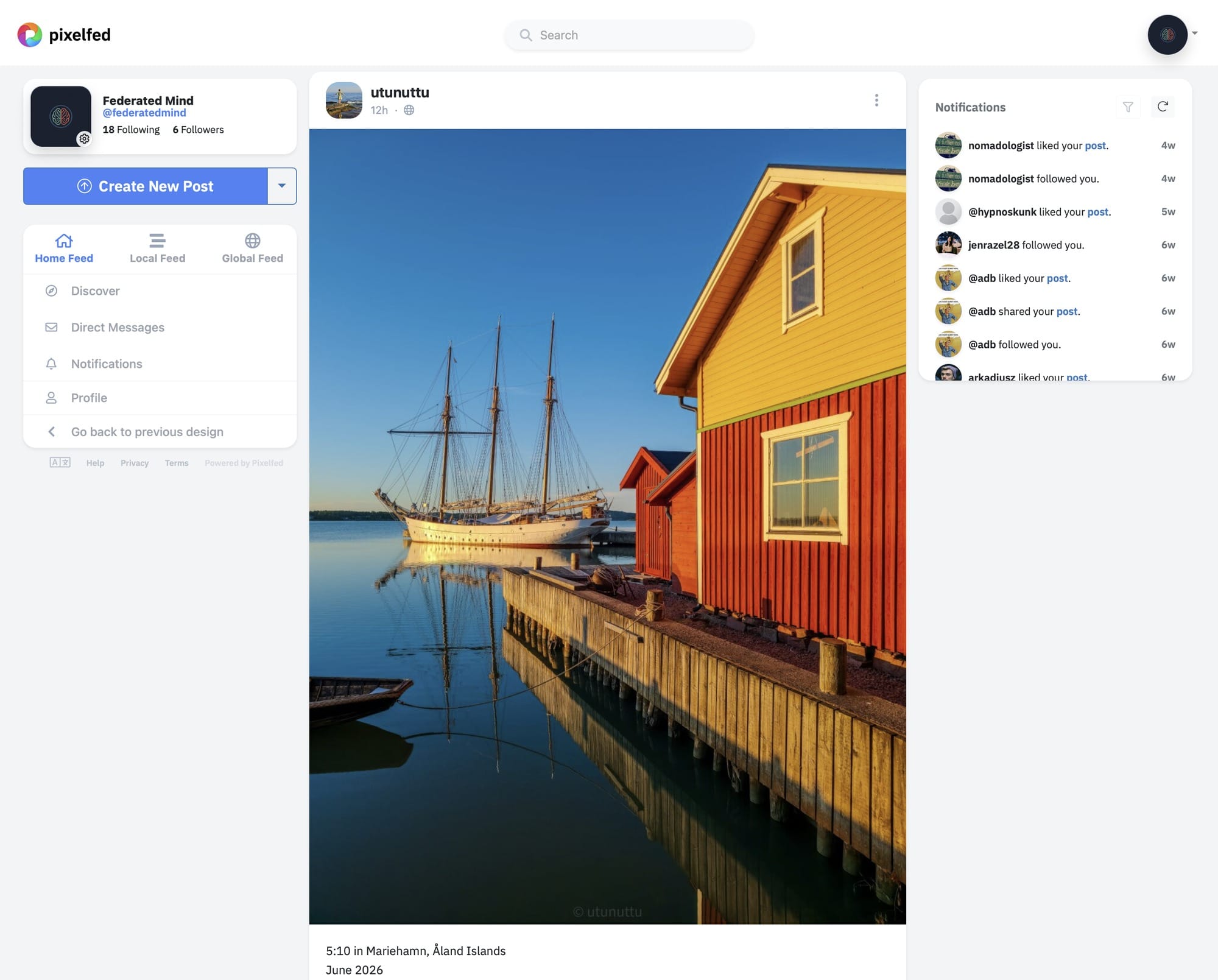
As of June 2026, roughly 100,000 monthly active users across 680–750 servers make Pixelfed the largest image-sharing platform on the fediverse. Daniel Supernault (dansup) has been building it since 2018, mostly alone, mostly in his spare time, funded by user donations and NLnet grants. In January 2025, he said on Mastodon that he'd received five VC offers and turned them all down: "I'd rather be broke and true to my beliefs, than sell out." Instead, he ran a Kickstarter that raised about CA$138,000 from over 2,100 backers (the goal was CA$50,000) to fund the Pixelfed Foundation as a nonprofit. One person building two of the fediverse's major visual platforms (Pixelfed and Loops), refusing the money that would have made it easier but would have changed what it was.
The feature set maps closely to what Instagram users expect: albums (up to 20 photos on some instances), stories, collections, photo filters, a discover page, hashtag organization, and geo-tagging. Privacy controls operate per-post (public, unlisted, followers-only), and accounts can be locked to require follow approval. Official mobile apps launched in January 2025 for Android and iOS.
Pixelfed federates over ActivityPub. A Mastodon user can follow a Pixelfed account, and posts appear in their home timeline as image posts with captions and alt text. Replies from Mastodon show up as comments on the Pixelfed side. Boosts work. The interaction is seamless enough that many Mastodon users follow Pixelfed accounts without realizing they're on a different platform.
The seams show at the edges. Stories and Collections are Pixelfed-specific features that don't translate to Mastodon at all. Multi-image posts get truncated: Mastodon displays only the first four images, even if the Pixelfed post has twelve. Followers-only posts don't cross the platform boundary. These are real limitations, and they matter if your audience is split across platforms. But for public photo sharing, the federation works well enough that it disappears into the background.
Meta apparently noticed. In January 2025, 404 Media reported that Instagram and Facebook were blocking links to Pixelfed. The Pixelfed flagship instance saw a surge of over 200,000 new accounts. That's its own kind of endorsement.
Under the hood, Pixelfed is a Laravel/PHP application backed by MySQL or MariaDB, with Redis for caching and either Laravel Horizon or a queue worker for background jobs (federation, image processing, notifications). It needs a proper web server (NGINX recommended) and HTTPS. The official prerequisites list PHP 8.x, Composer, and a set of PHP extensions. Heavier than GoToSocial's single Go binary with SQLite, lighter than Mastodon's multi-process Ruby stack. It can run on a Raspberry Pi, but a small VPS with 2GB+ of RAM is more practical for anything beyond a personal instance.
Instances
Pixelfed follows the same structural pattern as Mastodon: a flagship instance, regional servers, and niche communities.
pixelfed.social is the flagship, run by dansup, and the largest instance with over 200,000 registered users as of early 2025. pixelfed.de is German-language ("a welcoming instance for all"), with roughly 90,000 users and 464,000+ photos. Its rules are specific: no crypto promotion, no alt-right content. gram.social is European general-purpose, run by Stux, with about 94,000 users and 167,000+ photos. gram.social stands out for explicitly banning AI-only profiles and requiring disclosure on AI-generated content. pixelfed.art serves the visual art community specifically.
The full directory is at pixelfed.org/servers.
Clients
The official Pixelfed apps shipped in January 2025. The third-party ecosystem is smaller than Mastodon's but more varied than you'd expect: pixelfed.org/mobile-apps lists PixelDroid, Impressia, Fedilab, Tusker, and Pixelix across Android and iOS, plus multifediverse clients like Fedilab that support Pixelfed alongside Mastodon.
Pixelix also supports Vernissage instances (more on that below). Open-source (GPLv3), built with Compose Multiplatform by Ghostbyte, an Austrian indie studio. Over 1,400 commits and 300+ GitHub stars as of mid-2026, available on the App Store, Google Play, and F-Droid.
One of the other clients on that list has its own origin story. Impressia started life as "Vernissage for Pixelfed," an iOS client built by Marcin Czachurski. When Czachurski pivoted to building Vernissage as a full photo-sharing platform, the Pixelfed client got renamed to Impressia and the Vernissage name moved to the server project. Same App Store listing, different ambition.
Vernissage
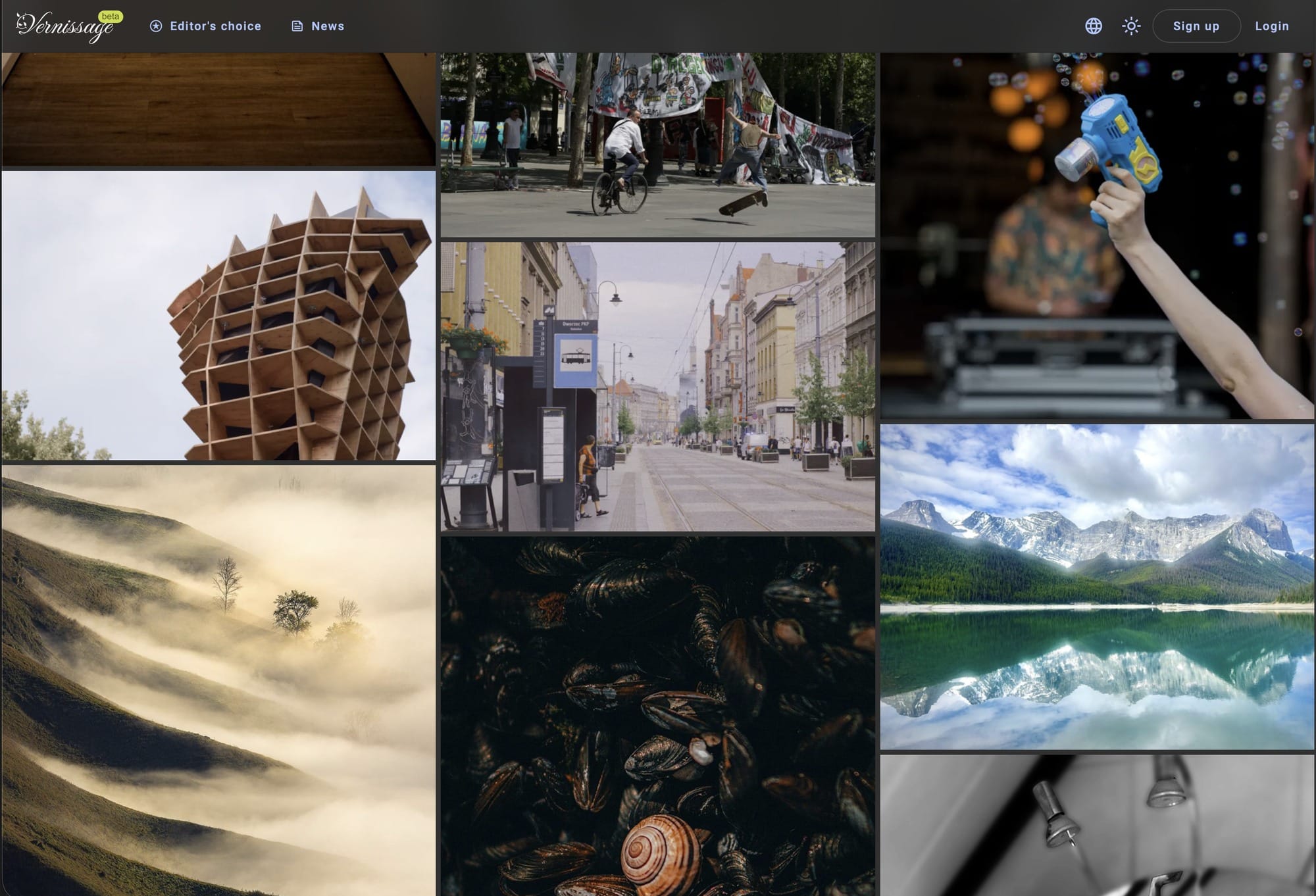
Vernissage is closer in spirit to Flickr than to Pixelfed. Where Pixelfed models Instagram's casual sharing, Vernissage targets photographers who care about EXIF (Exchangeable Image File Format) metadata preservation and HDR (High Dynamic Range) support: technical features that Instagram strips and Flickr traditionally preserved. We'll get to Flickr's own federation story (or lack of one) later in this post.
The whole stack is open-source under Apache 2.0 (GitHub). Development is Patreon-funded. The project is small enough that it doesn't appear in standard fediverse trackers (around 2,000 Mastodon followers as of mid-2026, as a rough proxy for scale). Main instance: vernissage.photos.
Clients
Vernissage has its own native iOS app (VernissageMobile), and the renamed Impressia still works with Vernissage instances alongside Pixelfed ones. Pixelix covers both platforms too. Three different clients from three different developers, all talking to the same ActivityPub-based server. The protocol doing what it's supposed to do.
snap.as
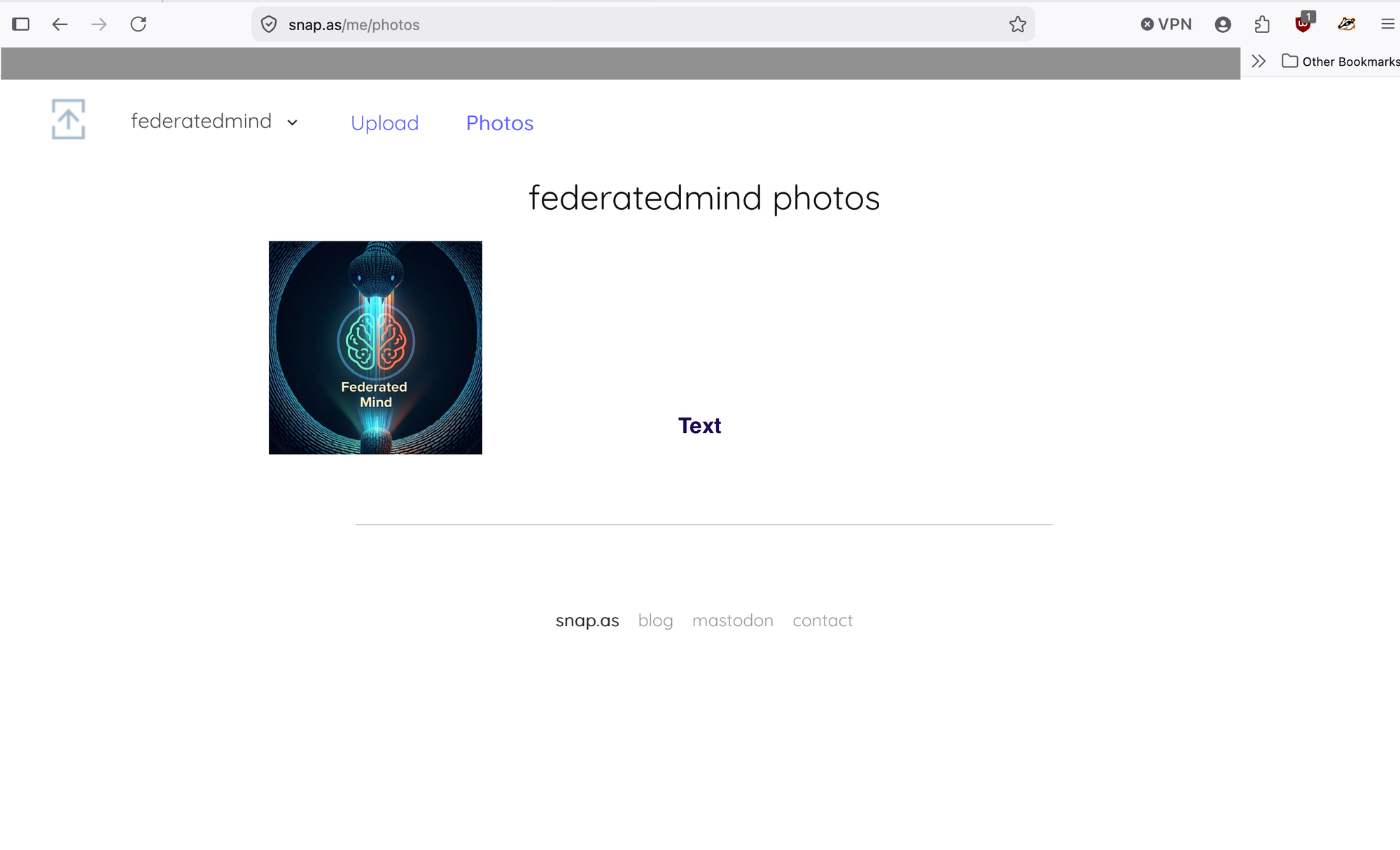
snap.as is photo sharing from the Write.as / WriteFreely team: minimalist, writing-adjacent, designed as a visual companion to WriteFreely blogs.
Photo uploads are included with a Write.as subscription, but galleries (the main organizational feature) are a $10 one-time add-on (as of 2026). That's a deliberate sustainable-software approach: not a free-platform play, not a subscription trap, just a modest fee that funds continued development.
The WriteFreely ecosystem gets full coverage in Part 3 of this series. For now, snap.as is the visual corner of that ecosystem.
Flickr
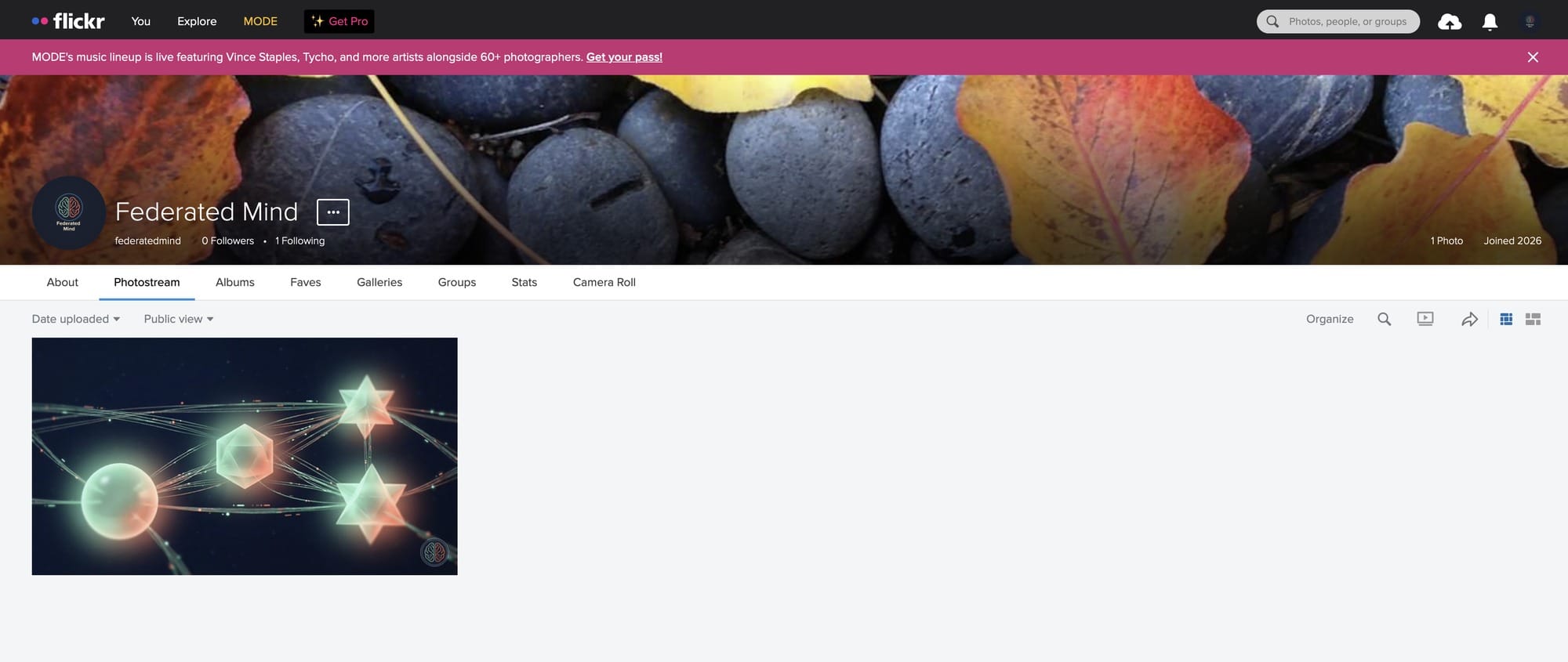
Flickr is one of the oldest photo-sharing platforms on the web (founded 2004). It never joined the fediverse. Not for lack of interest, and not for lack of workarounds.
The poll that went nowhere
Flickr CEO Don MacAskill polled users on Twitter and Mastodon about adding federation in November 2022, right after Tumblr announced the same. Per TechCrunch's summary of the poll, only 8.9% said no. Over half indicated they'd pay for the feature. MacAskill called it "right up our alley" but cautioned it would mean deprioritizing other roadmap items.
Three and a half years later, Flickr doesn't appear on any ActivityPub implementation list. Compare to Tumblr, which made the same announcement at the same time: Tumblr shipped partial ActivityPub support through WordPress/Automattic's plugin work. Flickr shipped nothing.
Bridges
Even without native ActivityPub, photographers have two working paths between Flickr and the fediverse.
Micro.blog supports Flickr as a POSSE (Publish on your Own Site, Syndicate Elsewhere) crossposting target. Publish on your micro.blog, and it syndicates to Flickr alongside Mastodon, Pixelfed, Bluesky, and others. One caveat: micro.blog strips EXIF metadata for privacy when crossposting photos. For photographers who rely on metadata, that's a real limitation.
ShutterQueue takes a different approach. It's a free, open-source Electron app by Paul Nicholson that batch-uploads photos to Flickr, Mastodon, Pixelfed, Bluesky, Tumblr, and Lemmy simultaneously. It preserves Flickr-specific features (groups, albums, location tagging) while pushing to fediverse platforms in the same queue. It reached a stable 1.x release by 2026. The creator describes it as "vibe-coded using AI tools," a practical example of how AI tooling is lowering the barrier to building fediverse infrastructure.
Even when a legacy platform doesn't natively federate, the open ecosystem creates tooling that connects it anyway. The protocol doesn't need universal adoption. It needs to be open enough that bridges emerge.
Short-form video
We cover two platforms here: one on ActivityPub, one on Nostr, and a bridge between them.
Loops
Loops started as a Pixelfed feature in 2019. After watching Instagram ship Reels and get users addicted to algorithmic short video, dansup decided to build it as a separate platform with healthier defaults. It's now short-form video (up to 3 minutes) on ActivityPub, supported by NLnet's NGI0 Core grant and community funding (Patreon, Ko-fi, Kickstarter). Mid-4,000s MAU across roughly 25–30 servers. Small, but the only federated short-form video platform with real momentum. dansup has said openly that Loops could become the most active fediverse platform by end of 2026. That's ambitious given the scale gap with Mastodon, but TikTok's ongoing regulatory trouble in the US keeps handing Loops visibility at exactly the right moments.
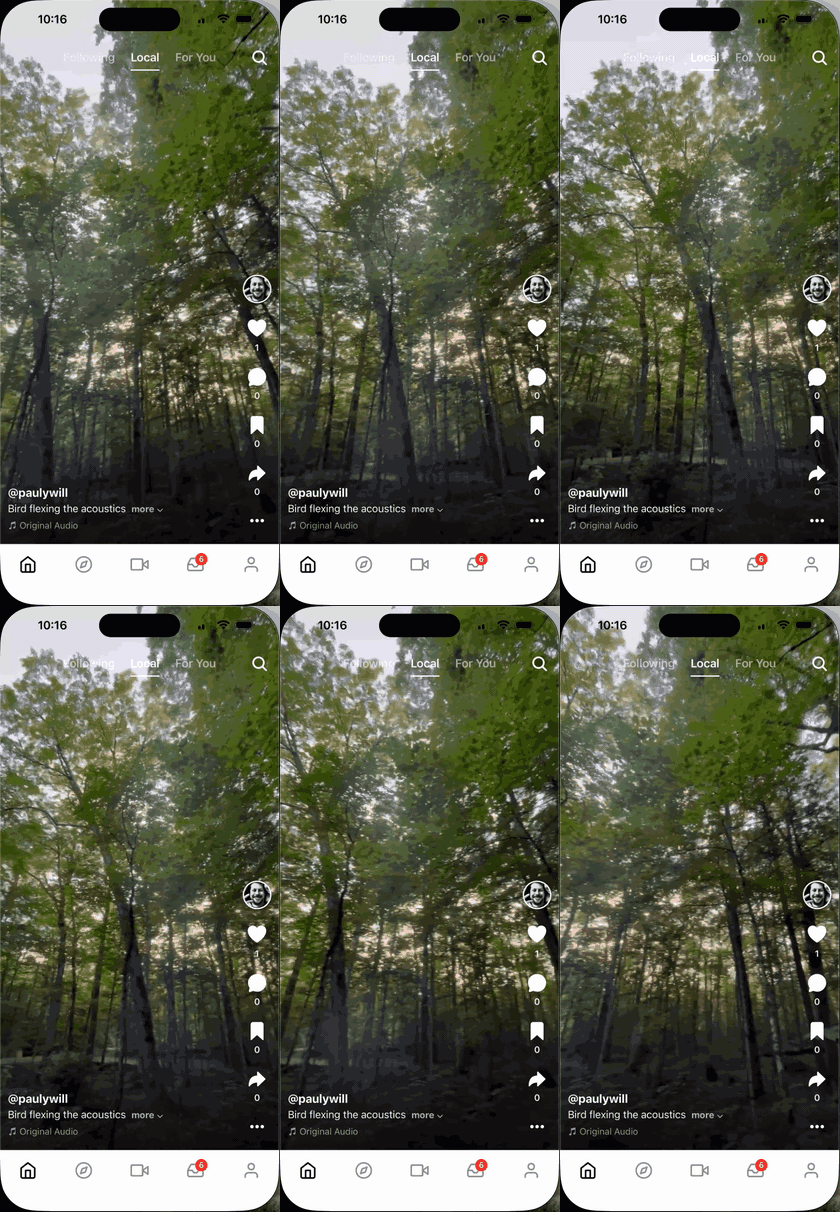
Sign-ups opened in October 2024, and ActivityPub federation landed in mid-October 2025. The iOS app launched on the App Store on January 30, 2026, after months in TestFlight. Duets (the format TikTok popularized, where creators respond to each other's videos side by side) shipped in 2026.
Loops uses a trust score system for moderation: users with high trust can post immediately, while lower-trust users have their content held for community review. It splits the difference between the open-posting model of most fediverse platforms and the opaque algorithmic moderation of centralized ones. The score is earned through community participation, not purchased or granted by an admin. The system is still evolving as Loops grows, but the architecture is in place.
Loops also currently offers an opt-in algorithmic For You feed, which is unusual in the fediverse, where most platforms treat chronological timelines as a point of principle. The key word is "opt-in": the default is chronological, and the algorithm only surfaces content if you ask for it. dansup has talked about capping the For You feed so you can't infinite-scroll it, and adding break reminders after extended use. Discovery is harder without some form of recommendation, especially for video, and dansup built the feed to acknowledge that without importing the engagement mechanics that make centralized short video addictive.
The privacy stance is explicit: Loops doesn't sell user data to third parties and doesn't train AI on user content.
Instances
With only 26 servers, Loops doesn't have the sprawling instance ecosystem of Pixelfed or Mastodon yet. loops.video is the flagship, run by dansup. The full server list is at FediDB. As the platform grows past beta, expect the same pattern: regional instances, niche communities, and admins who want to run their own.
Clients
Official apps only for now: iOS (launched January 2026) and Android (available on Google Play). No third-party client ecosystem has emerged yet, which makes sense for a platform still in beta. Loops content is also visible from any ActivityPub client that supports video: follow a Loops account from Mastodon and the videos appear in your timeline.
diVine and cross-protocol federation
rabble (featured in the Nostr post's editor's note) is building diVine: a Vine-style, 6-second looping video app built on Nostr. In June 2026, rabble submitted a pull request to the Loops server fixing remote search so bare handles on diVine resolve correctly, a prerequisite for Loops users to find and follow diVine accounts across the Nostr-ActivityPub boundary. dansup merged it and posted about it on Mastodon: "This is the magic of the open social web. Collaboration and connection, no matter where you are."
The Federation Across Networks series covered cross-protocol bridges at the identity and messaging layers. This is the same pattern showing up in video: two protocols, two platforms, connected by a contributor who built the connector rather than waiting for anyone's permission.
This publication's founding post used Vine's 2016 shutdown as the canonical example of why creators can't own an audience on someone else's platform. diVine is the protocol-level answer: a Vine revival where the content lives on Nostr relays, not on a company's servers, and federates to ActivityPub through an open bridge. The format that died because Twitter killed it now runs on infrastructure no single company controls.
Long-form video
We cover two platforms here: one for on-demand video hosting, one for live streaming, both on ActivityPub.
PeerTube
PeerTube is the fediverse's YouTube: long-form, on-demand video hosting with ActivityPub federation. Developed by Framasoft (a French nonprofit), it runs roughly 44,000–52,000 active users across 1,500–2,000 servers. The second-largest visual platform on the fediverse after Pixelfed, and by far the most infrastructure-heavy. Video hosting is expensive. PeerTube's existence proves that individual creators and small communities can carry that cost without a platform intermediary.
Each instance is an independent video library that federates with others. The P2P streaming layer has evolved: early versions used WebTorrent to distribute bandwidth across viewers, but PeerTube v6 removed WebTorrent client support in favor of HLS (HTTP Live Streaming) with P2P over WebRTC as an optional layer. HLS has better browser support and more predictable behavior. If you encounter older PeerTube tutorials referencing WebTorrent, that's why they no longer apply. The practical effect is the same: popular videos distribute load across viewers instead of crushing the host server. Admins can configure transcoding to generate multiple quality levels automatically, so viewers on slow connections get a watchable stream rather than a buffering placeholder. That transcoding is also the main resource cost of running an instance: every uploaded video gets re-encoded, which takes CPU time and storage.
ActivityPub handles the social layer. Follow a PeerTube channel from Mastodon, receive notifications when new videos post, comment cross-platform. PeerTube distinguishes between accounts and channels: one account can operate multiple channels (a personal vlog, a tutorial series, a podcast), each with its own subscriber base and feed. That's a more flexible model than most fediverse platforms offer.
PeerTube also supports live streaming directly, via RTMP (the same protocol OBS uses to stream to Twitch or YouTube). An admin enables it on the instance, and any user can start a live stream with integrated chat and optional replay recording. This means a single PeerTube instance can host both on-demand video and live broadcasts, which is a significant deployment advantage over running separate software for each.
PeerTube's plugin system gives admins a layer of control that most fediverse platforms don't offer. Plugins are NPM packages that admins install through the web interface. They can add themes, modify the player, integrate external services, or change how content is moderated and displayed. The PeerTube Extension Finder catalogs what's available. It's not as large as a WordPress plugin ecosystem, but it gives instance admins real control over how their instance looks and behaves.
Instances
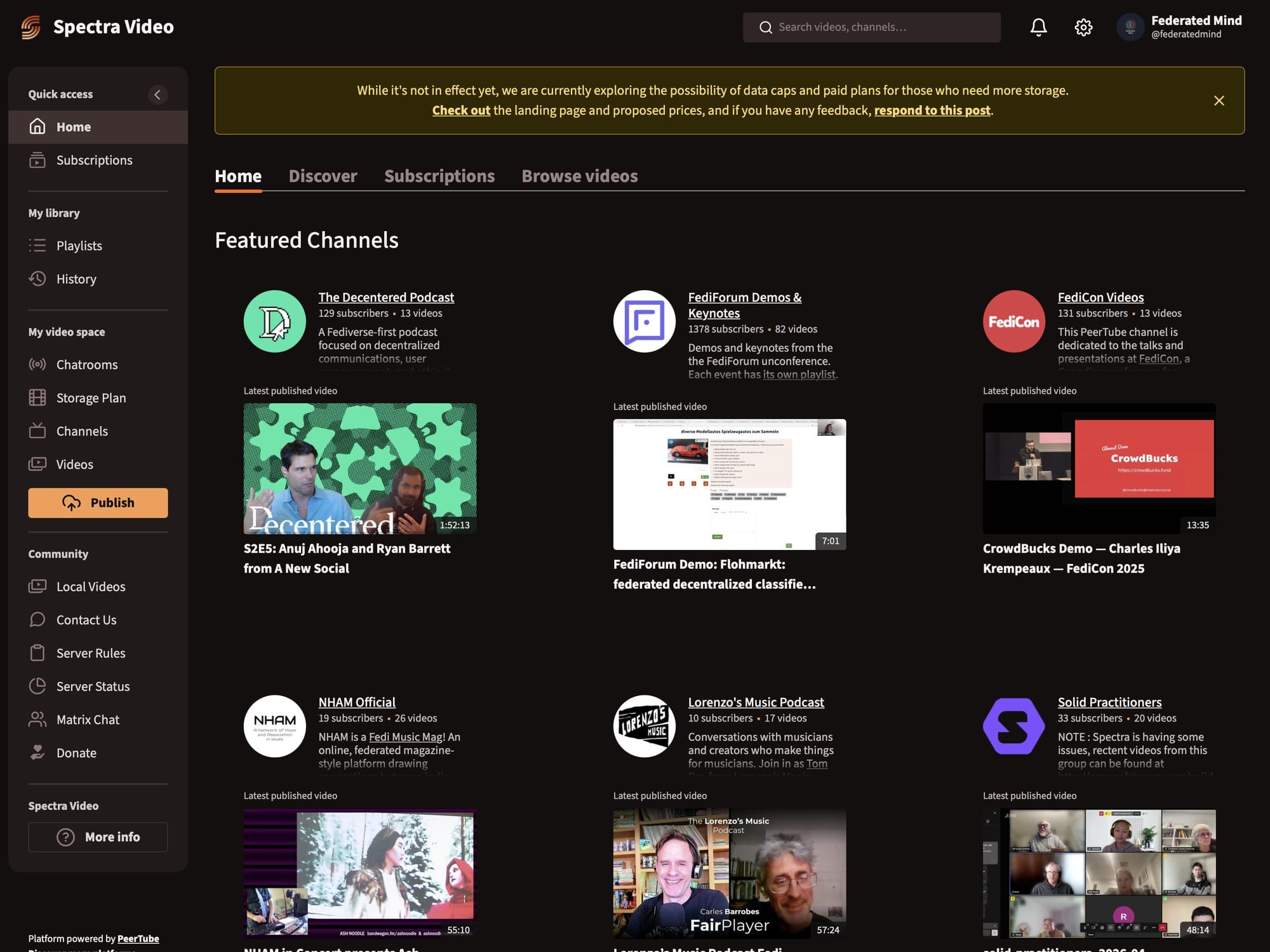
TILvids curates edutainment, Linux, and privacy content. Framatube is Framasoft's own instance, focused on free software and digital commons. spectra.video hosts original creative video (vlogs, documentaries, interviews). We're on spectra.video ourselves, after getting politely rejected by an instance that opposes AI tools.
Clients
Framasoft shipped official PeerTube mobile apps in late 2024, available on the App Store, Google Play, and F-Droid. The third-party ecosystem is the deepest of any visual fediverse platform. On Android: Thorium (dedicated PeerTube client), NewPipe (lightweight streaming frontend that also handles YouTube and SoundCloud), Fedilab (multifediverse client), and Grayjay (source-aggregator that treats PeerTube as one of many video sources). Desktop users have Pipeline and Cuttlefish for GNOME, plus a SimpleerTube web client that works without JavaScript. The full list is at docs.joinpeertube.org.
Owncast
Owncast is dedicated live streaming with a different design philosophy than PeerTube's built-in live feature. Where PeerTube adds live streaming to a video hosting platform, Owncast is a standalone streaming server: a single Go binary that handles RTMP ingest, HLS delivery with adaptive bitrate, integrated chat, and a web admin panel for managing your stream. Point OBS at it and you're live.
The ActivityPub integration is the differentiator from self-hosted solutions like Nginx-RTMP. Fediverse users can follow your Owncast instance from Mastodon and receive notifications when you go live, without creating an account on your site. Stream scheduling, viewer analytics, and a customizable web interface are built in. The project saw active development through 2025–2026, with ongoing refinements to its ActivityPub integration.
For creators who stream regularly and want complete ownership of their audience and analytics, Owncast is the Twitch alternative that actually exists and works. PeerTube's live streaming is better suited to instances that also host on-demand video. Owncast is better for someone whose primary activity is streaming.
The expensive layer
Text is cheap to federate. A Mastodon post is a few kilobytes of JSON. Photos cost more: storage, processing, thumbnails, CDN bandwidth. Video costs an order of magnitude beyond that: transcoding, adaptive bitrate delivery, and the disk space to hold it all. The visual web is the most expensive layer of the internet to decentralize, which is why centralized platforms dominated it so completely. Hosting video at scale was a problem only companies with ad revenue could afford to solve.
The fediverse solved it anyway, with a funding model that looks nothing like the centralized one. Pixelfed runs on user donations, grants, and a Kickstarter where the developer turned down five VC offers to stay independent. PeerTube distributes the cost across instances, each one funded by whoever cares enough to run it. Owncast puts the entire streaming stack in a single binary that runs comfortably on a low-cost VPS. snap.as charges ten dollars, once. None of these are venture-scale economics. That's the point.
dansup has been building Pixelfed for eight years, mostly alone, mostly in his spare time. Framasoft is a French nonprofit. ShutterQueue was built by one person using AI tools. The visual fediverse wasn't built by companies competing for market share. It was built by people who decided the work was worth doing, funded it however they could, and published the code so anyone else could do the same. The infrastructure exists because they chose to build it. The protocols exist so you don't need anyone's permission to use them. Go ahead and build.
Sources and further reading
Fediverse statistics
- FediDB Software Stats — per-platform MAU, server counts, and account totals; June 2026 data
- FediIndex — alternative aggregator with independent methodology
- Fediverse Observer — instance-level geographic and uptime data
Pixelfed
- Pixelfed — project home and instance directory
- Pixelfed Docs — Prerequisites — self-hosting requirements
- Wikipedia — Pixelfed — history and feature overview
- 404 Media — Meta is blocking links to Pixelfed — January 2025 Meta blocking report
- Pixelfed Kickstarter — CA$138K raised for Pixelfed Foundation
- TechCrunch — Ditching Meta? — January 2025 Kickstarter coverage
- Pixelix — open-source Pixelfed/Vernissage client
Vernissage and snap.as
- Vernissage — photography-focused ActivityPub platform; GitHub
- Impressia — iOS client for Pixelfed and Vernissage (formerly "Vernissage for Pixelfed")
- snap.as — minimalist photo sharing by the Write.as/WriteFreely team
Loops and diVine
- Loops — project home
- JoinLoops — features, mission, and server list
- Loops — Wikipedia — feature timeline and development history
- We Distribute — Big Updates Are Coming to Loops — development roadmap
- diVine — Vine-style video on Nostr
- Revolution.Social — rabble's podcast on decentralized social
PeerTube and Owncast
- PeerTube — project home and instance directory
- PeerTube Docs — Third-party applications — full client list
- PeerTube Docs — Plugin Architecture — plugin and theme system
- PeerTube Extension Finder — community plugin directory
- Framasoft — PeerTube's parent nonprofit
- TILvids — edutainment-focused PeerTube instance
- Owncast — self-hosted live streaming with ActivityPub; GitHub
- Elena Rossini — The Future is Federated — newsletter covering federated platforms from a filmmaker's perspective
Flickr
- TechCrunch — Flickr weighs support for ActivityPub — November 2022 poll coverage
- Micro.blog crossposting — POSSE syndication including Flickr
- ShutterQueue — open-source batch photo uploader for Flickr + fediverse
- Anil Dash — Why are the Artemis II photos on Flickr? — Flickr's archival role, Creative Commons licensing, and the Flickr Foundation's hundred-year plan
Federated Mind on these platforms
Cross-references in this series
- Your Social Graph Doesn't Belong to You — the founding post; Vine shutdown as canonical example
- Governance Is the New Differentiator — EM3; PeerTube rejection anecdote originated here
- Part 1: Misskey, Pleroma, Friendica & more — FBM1
- Federation Across Networks: Nostr — FAN3; rabble editor's note
What's next: Part 3 of this series covers writing platforms that federate: Ghost, WriteFreely, and micro.blog.
snap.as and micro.blog, mentioned briefly in this post, get their full treatment there.